
How Much Is My MLBB Account Worth? Pricing Guide


Selling a Mobile Legends account can be tricky, especially when you’ve spent years building your rank and collecting skins. Price it too high and buyers lose interest. Price it too low and you’ve handed someone a bargain. This guide follows the process in order: what gives an MLBB account its value, how to turn that into a price using real listings, a worked example, the pricing mistakes that cost sellers money, and answers to the questions that come up most.
What Determines the Value of an MLBB Account?
There’s no official price list. Your account is worth what somebody pays for it, and that’s the end of it. But buyers aren’t random. They run through nearly the same checklist every time.
Rank (Current and Peak)
Mythic gets attention. Epic, not so much. Reaching Mythic means grinding through a lot of ranked games and winning them, and buyers know that. Just don’t lead with your current tier alone. Seasons reset, and a bad weekend can cost you a division. Your highest rank is the better receipt for what the account can do, so find where the game shows each one (the menus move around between updates) and keep both numbers handy.
Skins
This is where prices swing the most, and it’s also where sellers get things wrong. Skins aren’t equal. A Starlight or Collector skin is worth more than a standard one. An old event skin that can’t be bought anymore is worth more again. And a skin for a hero half the server plays beats the same grade of skin on a hero hardly anyone picks.
Which means counting is the wrong move. Ranking is the right one. A handful of rare skins almost always outweighs a big stack of cheap ones.
Hero Roster
Nobody wants to grind for heroes. If you’ve unlocked almost everyone, that’s worth real money to the right buyer. Missing the last few releases will pull the value down a little, since buyers always count.
Age, Level and Match History
Old account, lots of matches: it reads as real. Two-week-old account, twenty games, a perfect win rate: it reads as a red flag, and buyers who’ve been burned before can smell it. Total matches, win rate and hero mastery tell the story of how the account got played, and that story has to match the rank being advertised.
Account Standing
Boring, but it can sink a sale. Active penalties, past punishments and credit score all count. A restricted account goes for much less, if it goes at all.
Logins and Ownership
Think about the handover. If the email and every linked login are yours and can be swapped, people relax, and relaxed buyers pay more. If the account is bound to a Facebook profile your cousin also uses, or you can’t remember which email started it all, expect lowball offers and maybe worse.
Diamonds and Leftovers
Extra diamonds and battle points are a nice bonus, but buyers rarely pay much for them. Don’t build your price on them.
How to Estimate Your MLBB Account’s Value
There’s no formula here, just a routine that works. Follow the steps in order and you’ll go from a vague guess to a price you can defend.
Step 1: Write Everything Down
Peak and current rank, hero count, rarest skins grouped by tier, level, total matches, win rate, and every linked login. This is your account’s profile on paper, and everything after this step builds on it.
Step 2: Gather Five or More Comparable Listings
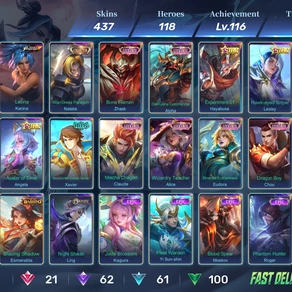
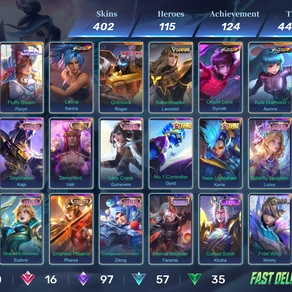
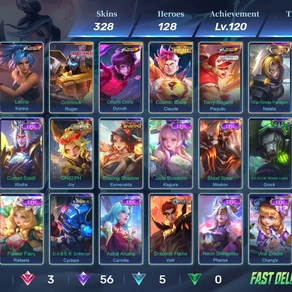
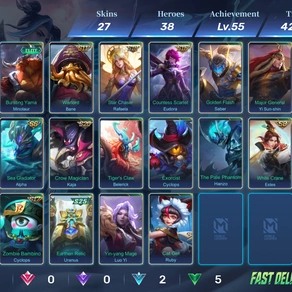
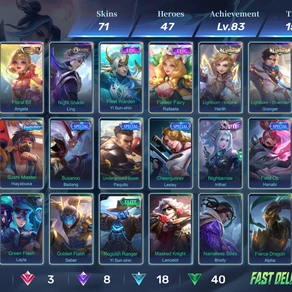
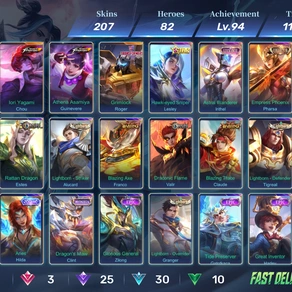
Find accounts that resemble yours in rank, skins and heroes. Why five? Because one odd price shouldn’t steer you. A good place to start is the mobile legends account for sale page on BuyAcc, where you can see how different sellers present rank, skins and price side by side.
Then sort what you find by similarity, and be strict about it. Matching rank doesn’t mean matching accounts: a Mythic with a few rare skins and one with a hundred basic ones are different products. Also check how long each listing has been up. A pricey listing that’s sat for weeks is the market saying no, while the ones that vanish quickly were probably close to right.
Hot-Selling Mobile legends bang bang accountMore
Step 3: Remove the Outliers and Adjust
Very cheap listings are often scams or desperate sellers. Very expensive ones are wishful thinking. Look at where the middle bunches up, then adjust for your own account. Add for rare skins, a clean record and a long history. Subtract for missing heroes, a lower peak rank or messy bindings.
Step 4: Set an Asking Price and a Floor
Decide both now, while you’re calm, so you’re not inventing numbers when someone offers you something at 11 pm. An asking price plus a lowest figure you’ll accept gives you a range to work within.
Step 5: Prepare the Listing
Prep is boring and it’s worth it, because a trustworthy listing is what lets you hold your price. Take fresh screenshots of your profile, rank, hero list and skins. Write a plain description with real numbers and no hype. Check every linked email and login, make sure you control all of them, and remove personal details or anything tied to your other accounts.
Step 6: Handle Offers and Close the Sale Safely
Low offers will come, and they’re part of selling. Reply with reasons (the rare skins, the clean record, the full roster) and stay above your floor. Serious buyers ask questions, check details and are fine waiting for a payment to clear.
A good price doesn’t help if the deal goes sideways. Give out no login details until the payment has really cleared, and remember that a screenshot of a transfer proves nothing. Be careful with anyone who overpays and asks for the difference back, or who keeps trying to move the chat into private messages. Keep your conversations and receipts in case a dispute comes up.
MLBB Account Pricing Example
The numbers are made up, just to show the thinking. Say you’ve looked through several mlbb account for sale listings and found five close matches priced at 50, 60, 65, 70 and 90 in your local currency. Drop the 90. The rest run from 50 to 70, centered near 65, so your starting zone is roughly 60 to 70.
Now compare your own account against them:
| Your account compared with the three listings | Asking price | Floor |
| Roughly the same as the others | 65 | 60 |
| Two event skins that none of them have | 72 | 66 |
| Missing several heroes that they all have | 62 | 58 |
Same method, different account, different answer.
Common Pricing Mistakes
- Pricing on emotion. You put in a lot of time and that matters to you, but a buyer is paying for what the account gives them today, not for your effort.
- Leaning on a single listing. One price tells you almost nothing, so don’t copy it and call it a day.
- Ignoring rarity. One limited skin can be worth more than ten common ones.
- Hiding flaws. Missing heroes, penalties and messy bindings all surface eventually. Mention them first, because buyers who find out after paying turn into dispute tickets.
- Pricing low out of fear. You’ll feel great for a day, until you learn what the account was really worth.
- Pricing high and never budging. Weeks of silence is information, so adjust.
- Rushing. Urgency makes people accept offers they’d normally laugh at.
FAQs and Conclusion
Does a higher rank always mean a higher price?
No. A lower-ranked account with rare skins and a full roster can beat a higher-ranked one that’s otherwise empty.
Does a season reset hurt the value?
Your current rank might dip. Your highest rank doesn’t, so list both and nobody gets confused.
Should I wait for a better price?
Maybe. If the account is common, waiting won’t change much. If it has rare skins, patience can pay off, but a stale listing stops getting clicks.
Can I raise the value before selling?
You can improve how it looks: clear screenshots, an honest description, clean logins. Spending money on the account just to resell it almost never pays back.
Is it allowed to sell an MLBB account?
Moonton’s rules may not allow account transfers, and enforcement can change, so read the current terms and know the risk before you go ahead. If you do decide to sell mlbb accounts, choose a platform with a clear process over a private chat, and read its seller policies first.
Conclusion
Pricing an MLBB account is a sequence: understand what buyers value, compare real listings, adjust for your account’s strengths and weaknesses, set a range, and close the sale carefully. Do that homework and you can ask for a fair price with confidence, without underselling something you spent years building.