
How to Sell Last War Accounts: Tips for Sellers


Maybe you’ve got a Last War: Survival account that’s taking up time you don’t have anymore, or you’re ready to move on to a different game. Selling it can make sense, but posting it online and hoping for the best usually doesn’t go well. You need to know what the account is really worth, describe it honestly, protect your personal details, and pick a marketplace you can trust. Below, I’ll go through how to do each of those things, step by step, with examples you can copy for your own account.
1. Work Out What Your Account Is Actually Worth
A high account level looks impressive, but it doesn’t automatically mean a high price. Buyers care about one thing: how much time and money does this account save me? So before you write a word of your listing, go through your account the way a buyer would.
-
Heroes
Heroes usually matter most, because they decide how strong your squad can be. When you review yours, look at the level and star rank of each hero, how rare they are, and whether they’re any good in the squad setups players use right now. Check their gear and skill levels too, since a hero with upgraded equipment is ready to fight and one without it still needs a lot of work.
Here’s a simple example. Say two accounts both have five high-rarity heroes. On the first, all five are at a high star rank with good gear, and together they make a squad that works. On the second, the same five heroes sit at low star ranks with no gear. On paper, they look alike, but the first account has already done most of the hard work for the buyer, so it’s worth noticeably more.
If a hero isn’t fully upgraded, say so. Calling a hero “maxed” when there’s still a lot left to do is the quickest way to lose a buyer’s trust, because they’ll compare your words to your screenshots.
-
Base progress
Your base shows how much long-term effort went into the account. Write down your headquarters level, your key building levels, how much research you’ve finished, your total power, and the server you’re on. Research deserves special attention because it’s limited by time, so a buyer can’t just pay to catch up on it quickly.
Balance matters too. A mid-level headquarters with nearly complete research and evenly upgraded buildings can be more attractive than a higher headquarters level with neglected research, because the first account is stronger where it counts.
-
Resources, skins and extras
Resources, speed-ups, skins, VIP level and special achievements all add something, but usually less than sellers hope. A rough way to sort them: a working top squad, high-rank heroes, finished research and a high headquarters level are the big value drivers. VIP level, rare equipment, and large stockpiles of valuable materials come next. Cosmetics, small resource amounts, hunts, and early-game rewards come last, since any player can collect those.
-
Condition and ownership
Before you list an account, make sure you can log in reliably, it has no bans or penalties, you’re the original owner, and you know exactly how it’s linked (email, social, login, or platform account). Unclear ownership or messy linking makes an account harder to sell and much more likely to end in a dispute. A few minutes of checking now saves a lot of stress later.
2. Research the Market and Set a Price
Price too high and buyers will scroll past you. Price too low and you leave money on the table. The most reliable way to land in the right range is to compare real listings rather than guessing, or adding up what you spent on the account.
Here’s a method that works:
- Write down your key stats: headquarters level, power, server, top heroes with their star ranks and gear, research progress, and VIP level.
- Find three to five listings that are close to yours. A good place to start is by browsing Last War accounts for sale and noting the ones that match your stats. Ignore accounts that are far stronger or far weaker.
- Note the lowest, highest, and middle prices among them.
- Adjust for the differences. If your squad or research is better than most of them, price above the middle. If your heroes are weaker or the account has a limitation, price below it.
- Decide the lowest price you’d accept, then list a little above that so you have room to negotiate.
- If nobody asks about it after a week or two, change one thing at a time (price, title, or screenshots) and see what happens.
Hot-Selling LastWar Survival accountMore
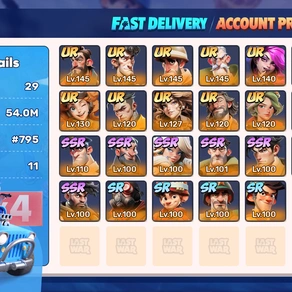
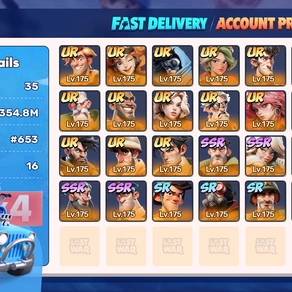
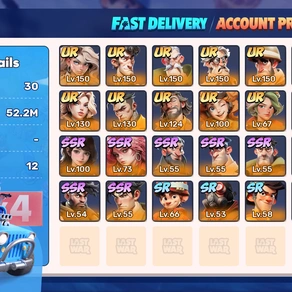
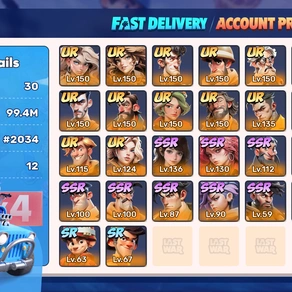
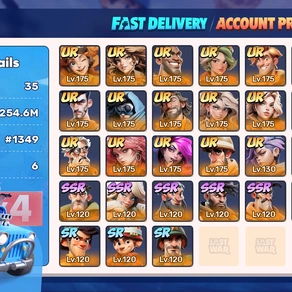
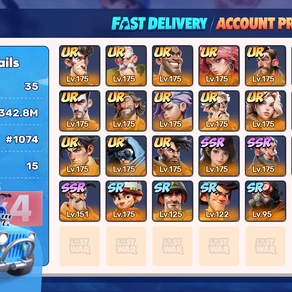
Here’s how that might look with made-up numbers. Suppose four similar listings are priced at 40, 55, 60 and 80. Your main squad is stronger than two of them, but your research is behind the 80 one. Listing somewhere in the upper middle of that range would be sensible. Those figures are only an example, so your own numbers need to come from listings you actually find.
Keep in mind that listing prices are what sellers are asking, not what buyers actually paid. Use them as a rough guide, not as proof of what your account is worth. It also helps to remember that a fair price comes from what the account offers a buyer today, not from the hours or money you put into it. Buyers pay for what they’re getting, not for your effort.
3. Write a Listing Buyers Can Trust
A good listing answers a buyer’s questions before they ask. Skip vague titles like “Strong Last War Account” and put real details in, for example: “Last War Account | HQ [level] | [power] | [server] | [top heroes]”.
In the description, cover your headquarters level and total power, your server, your main heroes with star ranks and gear, your research and building progress, your VIP level, skins and notable resources, and the login method. Mention any known limitations too. If something is unfinished or doesn’t work, say so plainly. A buyer who finds a hidden problem after paying is far more likely to dispute the sale.
Your screenshots should back up every claim you make. Take them on the day you publish, so they match the account as it is right now. You’ll want one of your profile or home screen showing power and headquarters level, one of your main squad with levels, stars, and gear, one of your hero roster, one of your research, and one for anything else you mention, like VIP or skins. Check that the text is readable and nothing important is cropped.
Before you upload any screenshots, blur out your email address, payment details, and any recovery information. Those small details are easy to overlook, and they’re exactly what you don’t want strangers to see. And never put passwords or verification codes in an image or in the listing text, not even “just for a moment.” Once it’s posted, you can’t control who sees it.
4. Choose a Marketplace
Marketplaces differ a lot in their fees, verification steps, payout timing, and how they handle disputes, so it pays to compare before you pick one. Start with the money. Find out what the marketplace charges and when that fee is taken out. Check whether it holds the buyer’s payment until the deal is finished, and whether it gives you a clear process for handing over the account. Then look at verification. What will you need to verify, how long does it take, and which methods does it support?
Finally, find out what happens if a buyer says there’s a problem. A clear dispute process can save you a lot of trouble. Be cautious about any platform that pushes you to move the conversation or payment somewhere else, can’t explain its fees clearly, or has no way to reach support.
-
How BuyAcc works for sellers
BuyAcc is a game account trading platform. It gives sellers a place to list an account, a process for transferring it, and payment escrow once a transaction is completed.
In practice, that setup helps in a few ways:
- Your listing follows a standard format, so buyers can compare it with other accounts easily, and you can see what details they expect.
- Payment goes through the platform, not directly between you and a stranger. That lowers the risk of non-payment and payment scams.
- The transfer follows set steps, so you and the buyer both know what comes next.
- You can browse the Last War account listing section first to see how other sellers describe and price similar accounts. That’s useful for the research in Section 2.
Before you commit, read BuyAcc’s current seller policies and check the details for yourself: the fee, how long you wait to get paid, which payout methods are available, what verification you need to complete, and the exact transfer steps. Policies change, so trust the platform’s official pages over this guide.
One more thing. A marketplace allowing listings doesn’t mean the game allows account transfers. Check the current Last War: Survival terms as well as the marketplace’s rules. A third-party platform can’t guarantee access to an account if the game’s publisher doesn’t permit the transfer.
5. What the Selling Process Looks Like
The exact steps depend on the platform, but most sales go like this:
- Prepare the account: audit it, take screenshots, and confirm you own it and know how it’s linked.
- Set your price and your minimum using the method in Section 2.
- Create the listing and finish any seller verification the platform asks for.
- Answer buyers’ questions, using the platform’s official messaging only.
- Once you agree on a sale, the buyer pays through the platform, and the money is held until the conditions are met.
- Transfer the account by following the platform’s steps exactly. Don’t improvise, and don’t send login details through unofficial channels.
- After the buyer confirms the account matches the listing, or the platform’s confirmation period ends, you get paid.
Tell buyers honestly how long this will take and what steps are still left, including any verification you’re waiting on.
6. Protect Yourself and Your Account
Stay inside the marketplace’s official process from the first message to the final payout. If a buyer promises a faster deal in exchange for using some other payment method, that’s a red flag, not a favor. The same goes for anyone who asks you to click outside links, hand over security codes early, pay a “release fee” to receive your money, or switch to a private chat app. If a charge or request looks odd, contact the platform through its official website or support.
Share login or recovery details only at the step where the platform’s process actually requires them. Also be aware that transfers can involve linked accounts, recovery options, ownership questions,s and possible action under the game’s terms, so only say an account can be transferred without restrictions if you’ve confirmed it. And don’t sell an account you don’t own or can’t legally transfer. After a genuine sale, don’t keep access to the account or try to take it back.
7. Talking to Buyers
Buyers will often want to double-check your power, heroes, or server before they pay. Reply quickly and accurately, and offer an extra screenshot if that’s safe and reasonable.
If you’re asked about something you can’t confirm, just say so. Something like “I’m not sure about that, and I don’t want to give you wrong information” works fine. Don’t guess or make something up. And never promise anything about future updates, balance changes, or events, because none of that is in your control.
8. Common Mistakes
| Mistake | What to do instead |
| Setting an unrealistic price | Compare similar listings and adjust for real differences in heroes and research. |
| Writing a vague description | List exact levels, star ranks, power, server, and login method |
| Using outdated screenshots | Retake them the day you list and match them to your text |
| Hiding account limitations | Mention them in the listing before any payment |
| Sharing sensitive information | Keep passwords, codes, and personal data out of images and messages |
| Accepting suspicious payments | Use only the marketplace’s official payment and transfer process |
| Ignoring game policies | Read the current game terms and marketplace rules before listing |
Conclusion
A good sale usually comes down to three things: an honest, well-documented listing, a price based on real comparisons, and a deal handled through an official platform. Even a great listing can’t remove every risk, and the game’s rules may restrict account transfers, so check them first. Open your account and take stock of what you actually have. Write down your headquarters level, power, top heroes, roles, and research progress, then take fresh screenshots so everything you show is current. Next, look at three similar listings to see how others present and price comparable accounts. Finally, read your chosen marketplace’s current seller policy before you publish anything. Policies change, and it’s better to find out the rules now than after you’ve listed.